Guide
Why passport photos get rejected
Photo rejections delay applications by weeks, and nearly all of them trace back to the same nine causes. Each one is checkable before you submit.

01Head too large or too small in the frame
Every document defines a band for head height. The US wants 50–69% of the frame; most 35×45 mm documents want 70–80%. Photo apps that just center your face routinely miss the band, and reviewers do measure it.
Fix: Measure, don't eyeball. Our tool shows your head height as a live percentage against the band for your exact document.
02Shadows on the face or background
Overhead lighting throws shadows under the eyes and chin; standing close to the wall throws a hard shadow behind your head. Both are among the most cited rejection reasons worldwide.
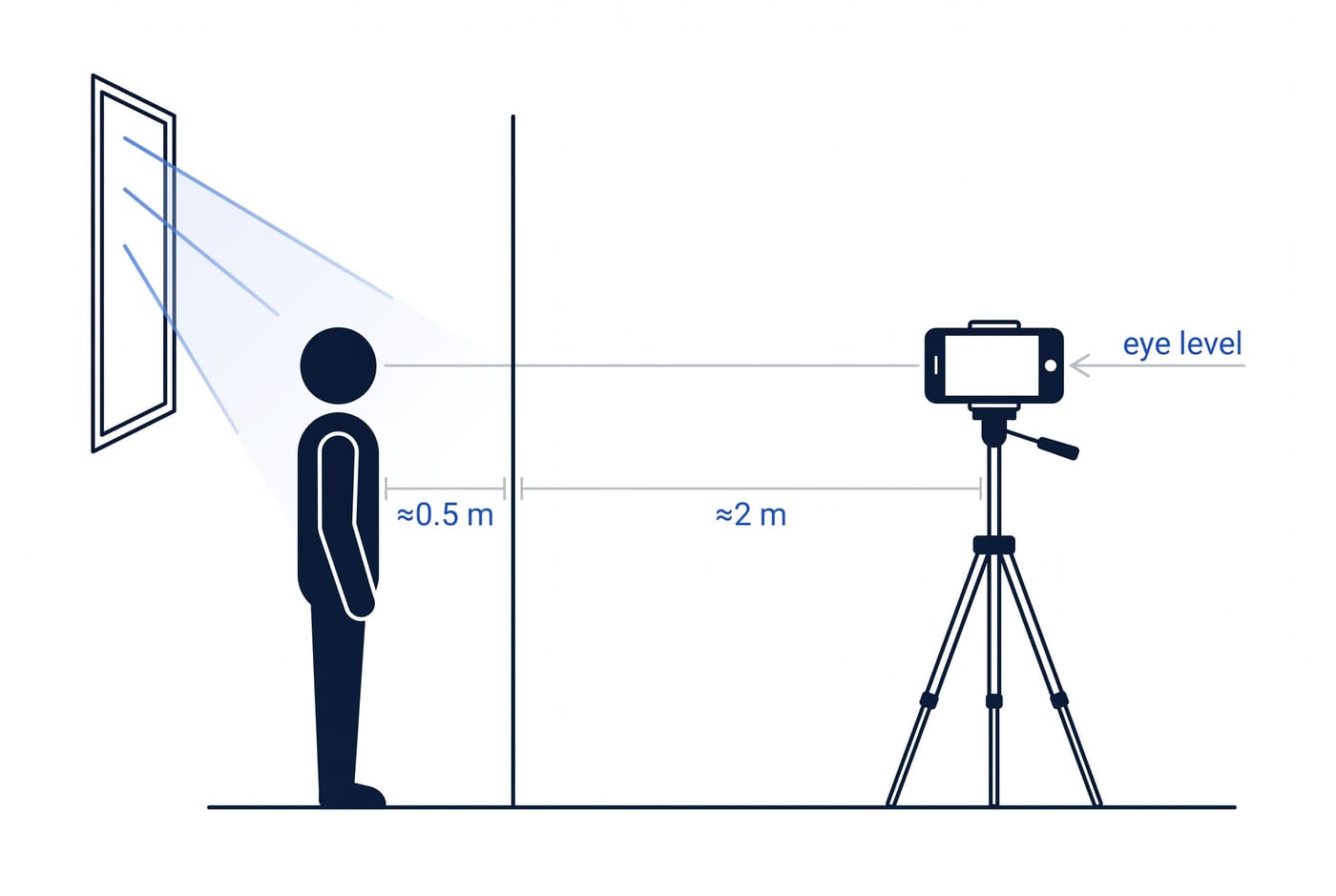
Fix: Face a window (or two lamps at 45°), and stand about a metre away from the wall so the background stays evenly lit.
03Wrong background colour, or a busy one
The US wants white or off-white, Germany light grey, France light grey or blue (white is rejected there). A textured wall, doors, or gradient lighting all read as 'not plain'.
Fix: Check your destination's exact colour on its document page, then photograph against the plainest wall you have. The checker measures uniformity and colour for you.
04The photo is edited
The US State Department's published photo requirements reject AI-altered photos, including background replacement, skin smoothing and filters (8 FAM 402.1). Other authorities are moving the same way.
Fix: Don't edit, retake. An honest photo against a real plain wall beats a perfect-looking edited one that gets your application bounced.
05Expression, glasses and eyes
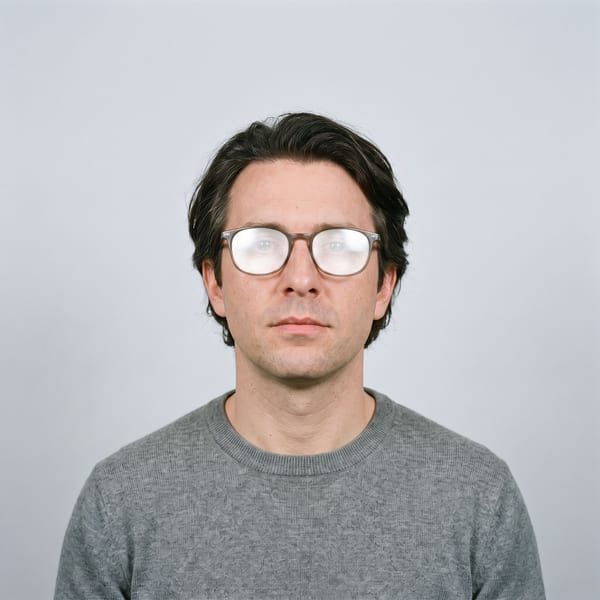
Smiling with teeth, tilted head, closed eyes, hair across the eyes, and glare on glasses all cause rejections. The US and India ban glasses outright.
Fix: Neutral face, mouth closed, both eyes open, hair behind the ears, glasses off unless your destination explicitly allows them.
06Photo too old
Most authorities require a photo taken within the last 6 months that reflects how you look now. Reusing the photo from your previous passport is a classic rejection.
Fix: Take a fresh photo for each application. It costs you a few minutes.
07Wrong pixel dimensions or file size
Portals validate mechanically: the DV lottery wants exactly 600×600 px under 240 KB; India's Passport Seva wants exactly 630×810 px between 10 and 250 KB. Close doesn't count.
Fix: Export at the exact required dimensions and compress under the cap. Our paid file does both, and the free compress and resize tools cover one-off needs.
08Too little resolution, or heavy upscaling
Cropping a face out of a group photo leaves too few pixels; upscaling introduces blur and artifacts that reviewers and automated checks notice.
Fix: Start from a photo where your head already fills a good part of the frame, shot at your camera's native resolution.
09Printed at the wrong size
A perfectly compliant 35×45 mm photo printed with 'fit to page' comes out the wrong physical size, and the head-height measurement fails with it.
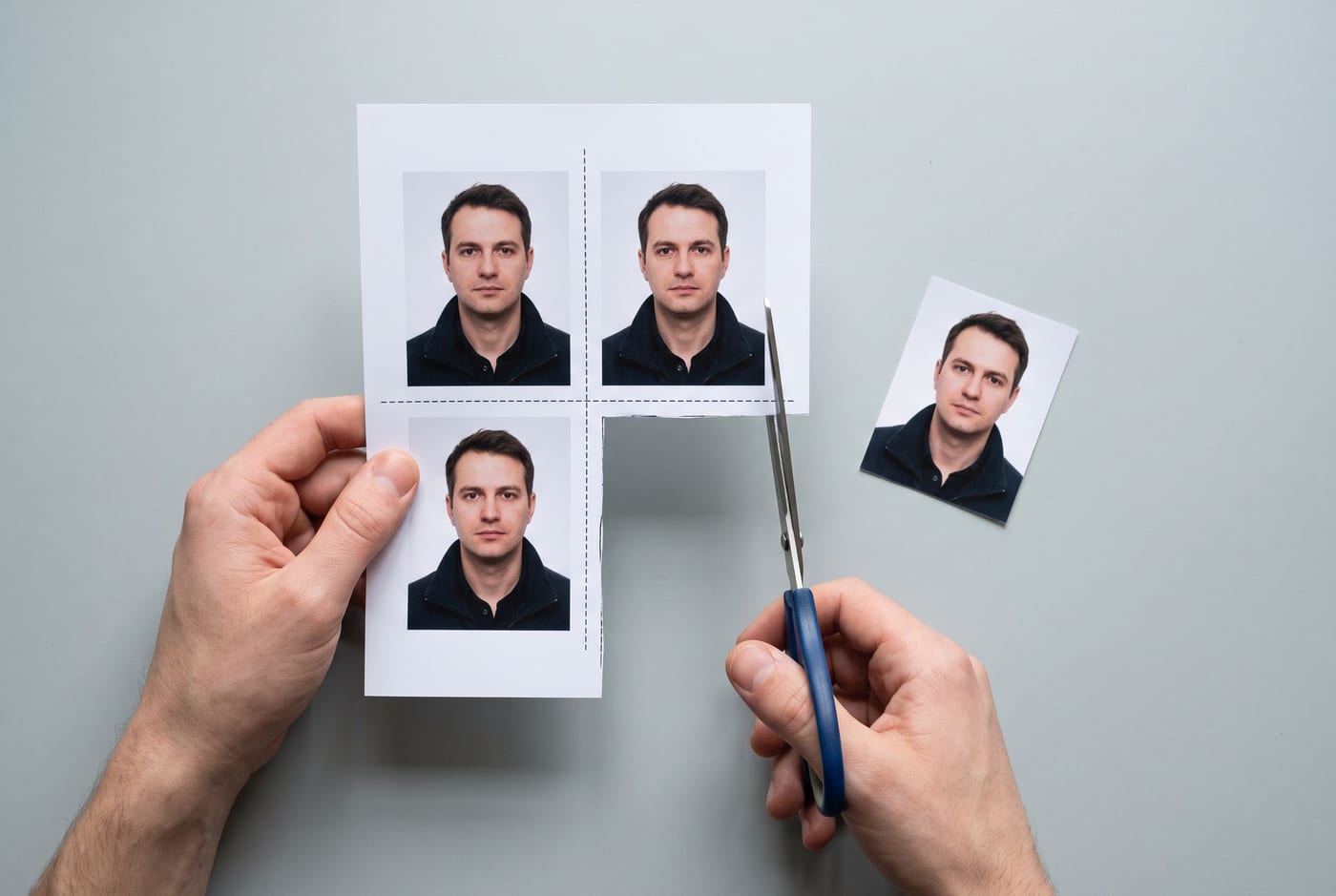
Fix: Print a prepared sheet at 100% scale on 10×15 cm paper. Our print sheet includes cut lines and the exact-scale instruction for the shop.



"Plain background" means different things
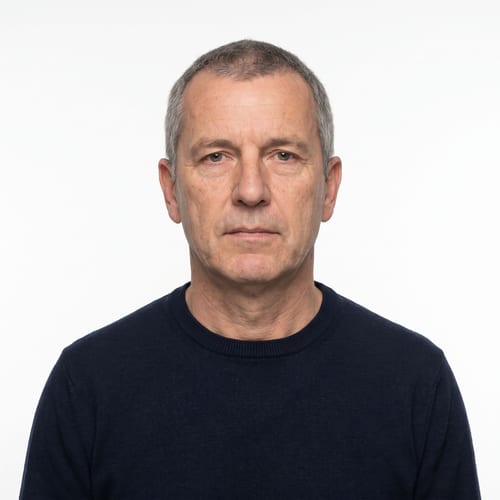
The same photo passes in one country and fails in the next. France explicitly rejects white; Qatar requires grey; Jamaica matches the shade to your complexion. Check the background colour on your document's own page before you shoot.
White
US, India, Italy, Spain, Poland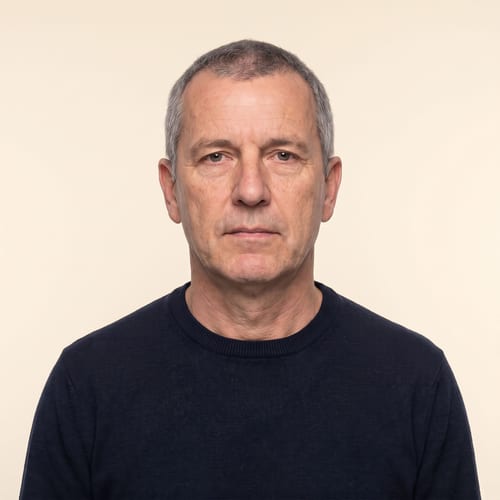
Off-white / cream
US (accepted), South Africa, UK prints
Light grey
Germany, Qatar, Schengen visas, New Zealand
Pale blue
France (white is rejected), Morocco, Jamaica
Rules that catch people out in one country only
The nine reasons above are near-universal. These are not: each one applies in a single place, contradicts what most other countries ask for, and is easy to fail precisely because you did the right thing somewhere else. Every figure here is taken from the issuing authority's own published requirements. Follow the link for the source and the date we last checked it.
Germany: you are not allowed to supply your own photo at all
Since 1 May 2025 paper photos are no longer accepted for the Reisepass or Personalausweis. The photo is taken at a self-service terminal in the Bürgeramt, or sent by a certified photographer over a secure channel. No citizen upload exists, so no online tool, ours included, can produce a photo you are permitted to submit. The Führerschein is the exception: driving licences were left out of the 2025 law and still take a conventional print.
German passport (Reisepass) photo, digital rules: full spec and official source
United Kingdom: do not crop your photo
This one is counter-intuitive enough that people break it while trying to be helpful. For a digital UK application, HM Passport Office does the cropping. Submit the full photo; the official guidance for the UK digital route is not to pre-crop it.
UK passport photo, digital and print rules: full spec and official source
India: 630×810 pixels, and it is not square
Passport Seva wants exactly 630×810 px, a 7:9 ratio, at 10–250 KB. Because so many countries use square photos, people submit a square crop and the portal rejects it mechanically. Glasses are banned outright.
India passport photo for Passport Seva upload: full spec and official source
US DV lottery: exactly 600×600, and the eyes have to be in the right place
The entry portal rejects any size other than 600×600 px, and it also checks that your eye line sits 56–69% of the way up the frame. Eye position is checked mechanically alongside the dimensions, and the entry period is seasonal, so there is no second attempt that year.
DV lottery photo, exactly 600×600 pixels: full spec and official source
China: the file can be too small as well as too large
The photo must be 20–80 KB, and both bounds are enforced. Almost every other authority publishes only a maximum, so people compress hard to be safe and drop under the floor. The pixel range is 354–480 wide by 472–640 high, locked to 3:4.
China passport photo, measured to the NIA standard: full spec and official source
France: white backgrounds are rejected
The background must be light grey or light blue. If you have been reusing an American-style white-background photo across applications, France is where it stops working. Most French documents also require an e-photo code from an accredited photographer or booth, though a self-made photo is valid for some titres and for foreign visas applied for from France.
Photo d'identité: French ID photo rules: full spec and official source
Canada: someone else has to write on the back
The print needs a commercial photographer's stamp, and a guarantor's signature on the reverse. No home-printed photo satisfies that on its own, so for the paper route treat our sheet as a guide to take to the studio rather than the finished article.
Canadian passport photo: the real rules: full spec and official source
Australia: prints only, no upload
There is no digital photo upload for an Australian passport. You send physical prints, and no photo editing is permitted. Worth knowing before you pay for a digital file anywhere.
Australian passport photo, checked and print-ready: full spec and official source
Italy: four identical prints for a permesso di soggiorno
The application takes four identical 35×45 mm photos, which is why our print sheet gives you four.
Permesso di soggiorno photo: four identical fototessere: full spec and official source
How to set up at home
Almost every fault above comes from the same three things: how far you stand from the wall, where the light is, and how high the camera sits.
Printing and cutting
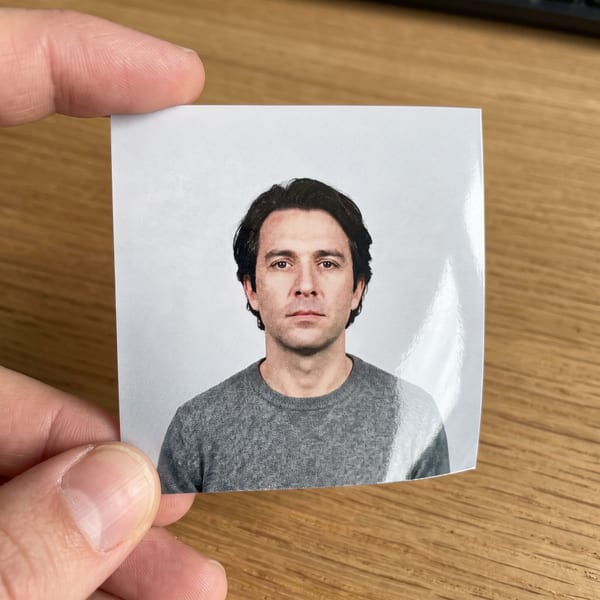
Print the sheet at 100% scale, never "fit to page", which silently rescales it and breaks the head-height measurement. Then cut along the dashed lines.
Check your photo against your document
Every measurement above is checked live and free:
How we handle compliance
- We check your photo against the official rules. We never retouch your face, and we only normalize the background where the destination country permits it.
- Every requirement is cited from official government sources, with the verification date shown on the page.
- What you get is a report of measurements, not a guarantee. Final acceptance always rests with the issuing authority.